
TABLE OF CONTENTS
- DID YOU KNOW? RENTING IS CHANGING FROM 1 MAY 2026.
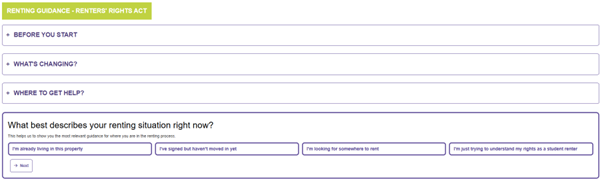
- USE OUR GUIDANCE TOOL
- READ THE RENTERS’ RIGHTS ACT GUIDE
- RENTERS' RIGHTS ACT - WHAT STUDENTS NEED TO KNOW
- WE'LL KEEP THIS INFORMATION UP TO DATE
- WHICH TENANCIES DOES THIS APPLY TO?
- WHAT IS CHANGING FROM MAY 2026 (THE HEADLINES)
- WHAT ABOUT PURPOSE-BUILT STUDENT ACCOMMODATION (PBSA)?
- NEW SYSTEMS COMING LATER
- WHAT SHOULD STUDENTS DO NOW?
- WANT MORE DETAIL? READ OUR GUIDE ON ALL THINGS TO DO WITH THE RENTERS' RIGHTS ACT.
DID YOU KNOW? RENTING IS CHANGING FROM 1 MAY 2026.
From 1 May 2026, your tenancy will move onto a rolling agreement with no fixed end date. This means it’s important to understand your rights if you’re planning to move out this summer.
If you want to leave your tenancy, one of the following three options will apply:
A. Your Landlord serves you a Section 21 Eviction Notice before 1 May 2026, confirming the end date of your tenancy agreement.

B. You need to serve two months' notice from when you want to leave your tenancy (although a shorter notice period can be agreed with your landlord if you need it).

C. NEW AS OF FEB 2026: Your landlord will give you two months' notice using a special short notice provision for Ground 4a that they can only use this summer. It will allow them to give you two months' notice to leave instead of four, and help with ending your tenancy in time for a new one to start.
Don’t worry if this sounds stressful or confusing! Your SU is here to support you with housing. Read along to find out what resources are available.
Use our handy template to serve notice to your letting agent or landlord to ensure you're confident in leaving your tenancy this summer.
USE OUR GUIDANCE TOOL
For detailed explanations and examples, you can also read our full guide here, which goes into more depth on specific housing situations.
RENTERS' RIGHTS ACT - WHAT STUDENTS NEED TO KNOW
The Renters’ Rights Act 2025 became law on 27 October 2025.
Most of the changes that affect students will come into force on 1 May 2026.
The Act introduces major reforms to private renting in England. These changes aim to improve security, fairness, and standards for renters — including students — but they will affect different types of student accommodation in different ways.
This page provides a clear overview of what is changing and how it may affect you as a Durham student.
WE'LL KEEP THIS INFORMATION UP TO DATE
The Renters’ Rights Act is being introduced in stages, with some details confirmed now and others coming later. We’ll keep our guidance and resources under review so that you have clear, up-to-date information as the changes come into force.
If you’re unsure about how the new rules apply to your situation (don’t worry, it can be pretty complicated!), you can always contact Durham SU’s Advice Service for individual support (https://ask.durhamsu.com/support/tickets/new).
WHICH TENANCIES DOES THIS APPLY TO?
The new rules apply to most private rented accommodation in England, including many student houses and flats.
They do not apply if:
- You live with your landlord (for example, renting a room in their home), or
- You rent accommodation directly from the University.
Some student accommodation provided by private providers is also treated differently - particularly purpose-built student accommodation (PBSA). This is explained further below.
WHAT IS CHANGING FROM MAY 2026 (THE HEADLINES)
From 1 May 2026, most private rented student tenancies will move to a new system. The key changes are:
- Most tenancies become open-ended (rolling)
Fixed-term student tenancies in the private sector will generally change into assured periodic tenancies. This means there is no fixed end date.
- You can leave with notice (depending on the type of accommodation and tenancy you have)
Students will usually be able to end their tenancy by giving at least two months’ notice, ending on a rent payment date.
- Landlords must have a legal reason to evict
“No-fault” evictions (section 21) will be abolished. Landlords will only be able to seek possession using specific legal grounds.
- Limits on rent increases
Rent can normally only be increased once a year, using a formal legal process. Students can challenge excessive increases.
- Limits on rent paid in advance
Landlords will no longer be able to require large upfront rent payments. In most cases, rent cannot be required more than one month in advance.
- Rental bidding wars banned
Landlords and agents cannot encourage students to offer more than the advertised rent.
- Stronger protections in key areas
This includes new rules around discrimination, pets, property standards, and landlord accountability.
IMPORTANT POINTS FOR STUDENTS IN SHARED HOUSES
Many Durham students rent shared houses, often on a joint tenancy.

Under the new system:
- If one person on a joint tenancy gives notice, this usually ends the tenancy for everyone.
- While this gives flexibility to individuals, it may create difficulties for other housemates who want to stay.

The Act also introduces a new possession ground for some HMOs ('Ground 4A') that allows certain landlords to regain possession of shared student houses over the summer, so they can re-let for the next academic year - but only if strict conditions are met, including advance warning to tenants.
For more information on the headline changes, take a look our headline changes guidance.
WHAT ABOUT PURPOSE-BUILT STUDENT ACCOMMODATION (PBSA)?
Some PBSAs - usually larger student blocks covered by recognised student housing codes - will be exempt from the new rolling tenancy system.
This means:
- PBSA providers may continue to use fixed-term academic contracts.
- Not all private student accommodation qualifies as PBSA, so it’s important to check what type of tenancy you are being offered.
NEW SYSTEMS COMING LATER
The Act will also introduce, in later phases:
- A national landlord and property database, making it easier to check whether a landlord is registered and compliant.
- A mandatory landlord ombudsman, giving students a free way to resolve disputes without going to court.
- Stronger standards around repairs, damp, mould, and overall housing quality.
WHAT SHOULD STUDENTS DO NOW?
- Be cautious about signing housing contracts very early.
- Read tenancy agreements carefully, especially if renting with others.
- Keep copies of any information your landlord provides.
- Seek advice early if something feels unclear or concerning.
WANT MORE DETAIL? READ OUR GUIDE ON ALL THINGS TO DO WITH THE RENTERS' RIGHTS ACT.
We’ve published a detailed guide to the Renters’ Rights Act, which explains how the changes may affect students in different housing situations. You can access the guide here.
The guide covers, in more detail:
- Shared student houses (HMOs)
- One- and two-bedroom student properties
- Purpose-built student accommodation (PBSA)
- What happens on 1 May 2026
- New notice rules and academic-year timelines
- What landlords can and cannot do under the Renters’ Rights Act
- Upfront rent, deposits, and guarantors
- Rental bidding and advance payment restrictions
- Pets and other new tenant rights
- What to do if your landlord contacts you about the changes
- Where to get help and advice
Was this article helpful?
That’s Great!
Thank you for your feedback
Sorry! We couldn't be helpful
Thank you for your feedback
Feedback sent
We appreciate your effort and will try to fix the article